Thứ Năm, 24 tháng 11, 2016

Do you know what make baby giraffe becom special?

 
Why do the baby giraffe become special animal? Maybe you don't know why but some factoflife I will tell you in my post here can explain for you. Try to know it because maybe you need it in future.
Fun information and facts about giraffe for kids
Fact #1
The giraffe is the tallest mammal on earth. New-born baby giraffes are even taller than mosthumans. And males can grow up to 5.5 meters (18 feet) tall.
Fact #2
The neck of a giraffes is too short to reach the ground. So it has to awkwardly spread its front legs or kneel to reach the ground for a drink of water.


A giraffe face
Fact #3
Like snowflakes and human fingerprints, no two giraffes have the same spot pattern.
Fact #4
Baby Giraffes can stand within half an hour of being born. After only 10 hours, they can actually run alongside their family.

A baby giraffe
Fact #5
Giraffes only need 5 to 30 minutes of sleep in a 24-hour period.
Fact #6
Giraffes only need to drink once every few days. Most of their water comes from plants they eat.
Fact #7
The idea that giraffes make no sound is untrue. When giraffes snort, bellow, hiss, etc, they make flute-like or low pitch noises beyond the range of human hearing.
Fact #8
Before mating, the female giraffe will first urinate in the male's mouth.


Giraffe couple in love
Fact #9
Giraffes are ruminants. This means that they have more than one stomach. In fact, giraffes have four stomachs, the extra stomachs assisting with digesting food.
Fact #10
Drinking is one of the most dangerous times for a giraffe. While it is getting a drink it cannot keep a look out for predators and is vulnerable to attack.
Fact #11
Male giraffes sometimes fight with their necks over female giraffes. This is called “necking”. The two giraffes stand side by side and one giraffe swings his head and neck, hitting his head against the other giraffe. Sometimes one giraffe is hit to the ground during a combat.
Fact #12
A giraffe's habitat is usually found in African savannas, grasslands or open woodlands.

Fact #13
The hair that makes up a giraffes tail is about 10 times thicker than the average strand of human hair.
Fact #14
Giraffes have a great sense of sight and smell and are able to run at speeds up to 35 miles per hour.

Fact #15
However, a baby giraffe in the wild is vulnerable because it has a shorter gait and is unable to keep up with the herd if a predator is detected. In the days and weeks following a birth, a mother giraffe will sometimes leave her baby hidden in tall grass for a few hours while she eats and roams.
See more things in my blog animal, plant, country,...
Thứ Hai, 7 tháng 11, 2016

All information about African wild dog


Following information about that people can share with others, which raises a broader and more interesting about  animal facts: All information about African wild dog


Physical Characteristics

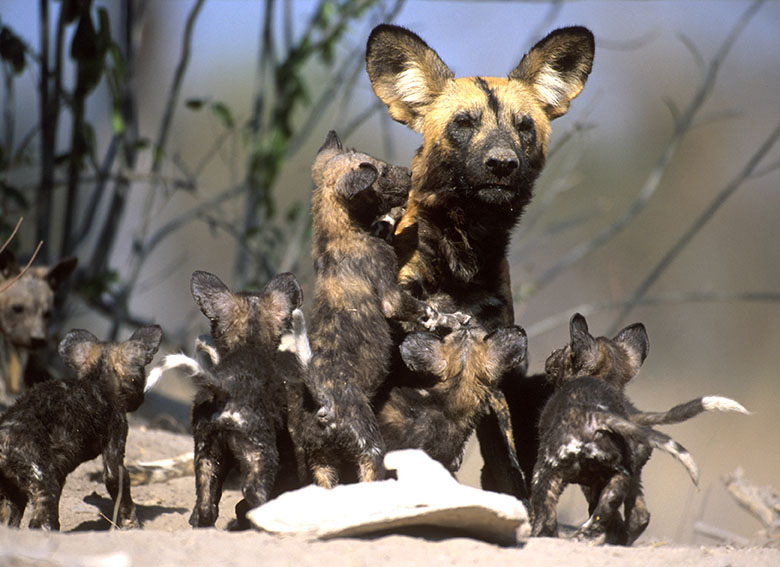
The African wild dog is long-legged, with massive jaws and very large, erect batlike ears. Although it resembles some domestic dogs, it differs in that it has four toes on each foot instead of five.

The Latin name for the African wild dog means “painted wolf,” which aptly describes the colorful coat of dark brown, black and yellow patches. Wild dogs have bushy tails with white tips that may serve as a flag to keep the pack in contact while hunting 

Habitat

Wild dogs live mostly in arid zones and in the savanna. They also are found in woodland and montane habitats where their prey lives. Do you want to check out our long and rich source of tigers facts in your spare time?

Kết quả hình ảnh cho African Wild Dog

Behavior

Wild dogs live in packs of six to 20. If the pack numbers fall below six, hunting efficiency is eroded. The dogs have a peculiar rather playful ceremony that bonds them for a common purpose and initiates each hunt. They start circulating among the other pack members, vocalizing and touching until they get excited and are ready to hunt. They start the hunt in an organized, cooperative manner. When prey is targeted, some of the dogs run close to the animal, while others follow behind, taking over when the leader tired. They can run long distances, at speeds up to about 35 miles per hour.

Of the large carnivores, wild dogs are the most efficient hunters – targeted prey rarely escapes. They tear the flesh until the animal falls, consuming even if it is still alive. This behavior may prejudice people against them, although in reality it may be no worse than the prolonged kills of other carnivores. Apart from its undeniable bloodiness, the remarkable aspect of the their hunting is the complete lack of aggression toward each other. Wild dogs have a social hierarchy but unlike many other social animals, there is little obvious intimidation. They have elaborate greeting rituals, accompanied by twittering and whining. Their large range of vocalizations includes a short bark of alarm, a rallying howl and a bell-like contact call that can be heard over long distances.

Diet

They usually hunt in the early morning and again in late evening, prettying on gazelles and other antelopes, warthogs, wildebeests calves and rat and birds. They may raid domestic stock, but as wild dogs seldom stay in one place for long, this damage is not extensive

Caring for the Young

A nuclear pack of about six dogs usually consists of one dominant breeding pair and several nonbreeding adult male helpers. Occasionally another female in the pack forms a subordinate breeding pair with one of the other males. A breeding female gives birth about once a year, with litters averaging about 10 pups, thought as many as 19 have been recorded. They pups are born in a shelter of thick bush or grass, or in a hole. Usually twice as many males are born. Unlike many other species, the female offspring leave the natal group when they reach maturity, not the males.

The hunting members of the pack return to the den where they regurgitate meat for the nursing female and pups. Although litters are very large, very few pups survive. Sometimes the dens are flooded, or the pups die from exposure or disease. When pack numbers are reduced, hunting is not as efficient and adults may not bring back sufficient food for the pups. The entire pack is involved in the welfare of the pups; both males and females babysit the young and provide food for them.

Predators

Throughout Africa wild dogs have been shot and poisoned by farmers, hunters and, at one time, by rangers who considered them as bloodthirsty raiders of livestocks and dispersers of wild herds. As the numbers of these wild dogs dwindle, they become more mysterious, elusive and enigmatic, reappearing suddenly in places they have not inhabited for months and then vanishing again a few days later. Even though protected in parks and reserves, wild dog populations have declined to the point that packs may no longer be viable. In some areas they are close to extinction.

Just keep checking out our site everyday to get more updated news and information about everylife aspects as animal, plant or science facts and so on.

Thứ Hai, 5 tháng 9, 2016

Predators and preys of Giraffes

 
Have you ever caught yourself pondering : What are the predators of Giraffes? You can’t say that you haven’t because that means that you wouldn’t have ended up here! Let us teach you all interesting animal facts about the predators and preys of the tallest land animal in the world - Giraffes

The main predators of the giraffe are humans, lions and crocodiles, explains the African Wildlife Foundation. Lions and crocodiles hunt the giraffe for food. However, humans hunt the giraffe not only for food but also for its hide, which is used to make jewelry.

Kết quả hình ảnh cho giraffe prey

The giraffe’s long legs and neck evolved to enable them to reach food that most other animals cannot access. However, their tall stature also helps them to see predators at a great distance and move off before they are in danger.
Also see: baby giraffe
Giraffes are restricted to the savannas and open forests of sub-Saharan Africa. Usually, predators avoid healthy adult giraffes and concentrate on young, injured or old animals, who cannot mount an effective defense. Giraffes have a cream base color that is covered in dark brown reticulations. This color and pattern combination helps to break up their silhouette when they are foraging among the trees. When cornered by a predator, giraffes often deliver powerful kicks with their legs.

Kết quả hình ảnh cho giraffe prey

Acacia trees are the most important food species for giraffes. According to the University of Michigan, Department of Zoology, adult giraffes may consume up to 145 pounds of food each day. However, in areas where food is scarce, they may survive by eating much less. Male giraffes tend to forage at the greatest heights, while females collect food from the bottom of the tree canopy.

For more: tiger facts                         

Thứ Hai, 29 tháng 8, 2016

How far can frogs jump?

 
Have you ever wondered an interesting fogs question: How far can frogs jump? Let’s see

Kết quả hình ảnh cho how far frog can jump
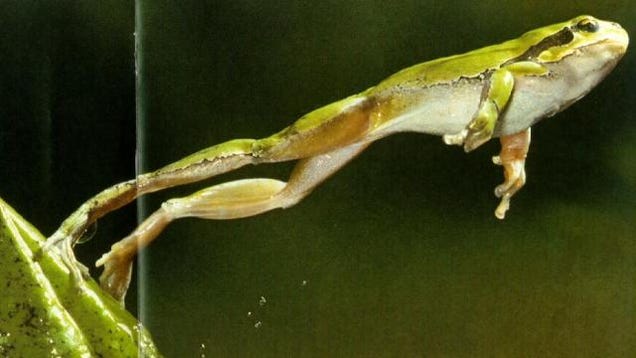
Frogs have varying jumping abilities because different species have different foot and leg structures. All aquatic frogs have webbed hind feet, which lets them swim quickly with strong strokes but does not tend to help them jump outside of the water. Flying frogs have webbed front feet, which lets them glide long distances when leaping. Burrowing frogs have short, muscular legs that limit jumping power but are helpful in digging burrows.

Kết quả hình ảnh cho how far frog can jump

Many frogs can jump at least 30 times their body length, and some smaller species of tree frogs can jump 50 times their length. This is the human equivalent of jumping the length of a football field without a running start. Some frogs in the genus Rhacophorus, flying or gliding frogs of Asia, can go even longer distances. These frogs have webbed toes that they use as parachutes to slow their fall and glide from one tree to the next, or to the ground. Jumping helps frogs avoid predators; the skeletons of some species are modified to absorb the shock when they land. Not all frogs are long jumpers. The narrowmouth toads of the southeast and or the Mexican burrowing toad can only hop a few inches.