Thứ Ba, 29 tháng 11, 2016

Top 17 interesting facts about Yaks


Keep following to get more amazing information about top 17 interesting facts about Yaks


Yaks are able to withstand temperatures of –40 degrees F. At this temperature, they have even been seen bathing in lakes and rivers. The yak’s warm coat provides insulation through a thick outer coating of long hair and a dense inner coating of matted, shorter fur.


  1. Most yaks are domesticated animals, though there is also a small, vulnerable wild yak population
  2. Yaks are herd animals. Herds can contain several hundred individuals, although many are much smaller.
  3. The herds consist primarily of females and their young, with a smaller number of adult males.
  4. A great deal of the yaks time is spent on grassy plains in the mountains grazing on grasses, herbs and wild flowers.
  5. Yaks live at the highest altitude of any mammal. That might be one of the most awesome animals facts you had no idea before.
  6. Similar to other cow species, the yak has more than one stomach which it uses to successfully get all the nutrients out of the plants that it eats.
  7. Yaks have firm, dense horns which they use to break through snow in order to get the plants that are buried beneath it. They will also use their horns in defence. How much do you know about tiger facts?
  8. They have a dense undercoat covered by generally dark brown to black outer hair, which almost reaches to the ground.
  9. In winter a yak can survive temperatures as low as -40 degrees (F).
  10. At night and in snowstorms, they will protect themselves from the cold by huddling up together, with the calves in the centre.
  11. Births usually occur in June and a single calf is born every other year.
  12. The female will find a secluded spot to give birth, but the calf is able to walk within about ten minutes and the pair will rejoin the herd.
  13. Yaks are highly friendly in nature and there has been very little documented aggression from yaks towards human beings, although mothers can be extremely protective of their young and will bluff charge if they feel threatened.
  14. Contrary to popular belief, yak and their manure have little to no detectable odor when maintained appropriately in pastures or paddocks with adequate access to forage and water. Learn more about science facts via our wide range of articles.
  15. Yaks grunt and, unlike cattle, are not known to produce the characteristic bovine lowing (mooing) sound.
  16. Historically, the main natural predator of the wild yak has been the Tibetan wolf, but brown bears and snow leopards have also been reported as predators in some areas.
  17. The wild yak is threatened by loss of habitat and over hunting by humans.

Thứ Hai, 7 tháng 11, 2016

All information about African wild dog


Following information about that people can share with others, which raises a broader and more interesting about  animal facts: All information about African wild dog


Physical Characteristics

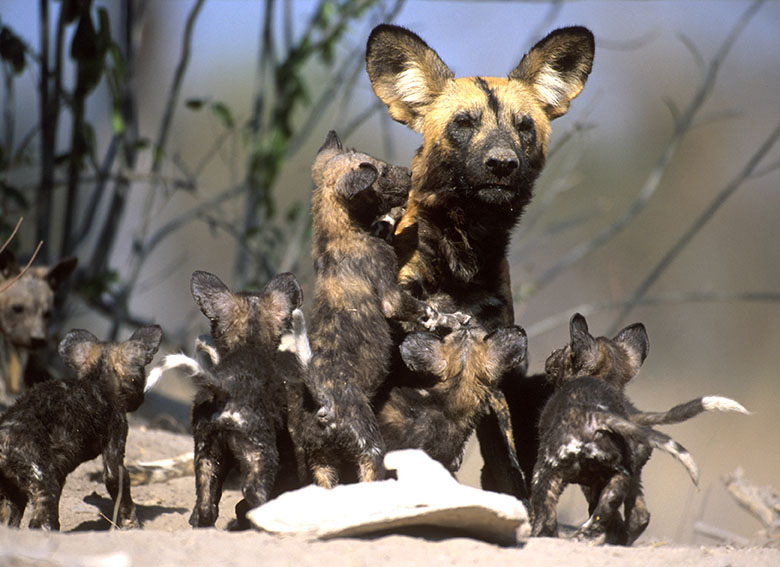
The African wild dog is long-legged, with massive jaws and very large, erect batlike ears. Although it resembles some domestic dogs, it differs in that it has four toes on each foot instead of five.

The Latin name for the African wild dog means “painted wolf,” which aptly describes the colorful coat of dark brown, black and yellow patches. Wild dogs have bushy tails with white tips that may serve as a flag to keep the pack in contact while hunting 

Habitat

Wild dogs live mostly in arid zones and in the savanna. They also are found in woodland and montane habitats where their prey lives. Do you want to check out our long and rich source of tigers facts in your spare time?

Kết quả hình ảnh cho African Wild Dog

Behavior

Wild dogs live in packs of six to 20. If the pack numbers fall below six, hunting efficiency is eroded. The dogs have a peculiar rather playful ceremony that bonds them for a common purpose and initiates each hunt. They start circulating among the other pack members, vocalizing and touching until they get excited and are ready to hunt. They start the hunt in an organized, cooperative manner. When prey is targeted, some of the dogs run close to the animal, while others follow behind, taking over when the leader tired. They can run long distances, at speeds up to about 35 miles per hour.

Of the large carnivores, wild dogs are the most efficient hunters – targeted prey rarely escapes. They tear the flesh until the animal falls, consuming even if it is still alive. This behavior may prejudice people against them, although in reality it may be no worse than the prolonged kills of other carnivores. Apart from its undeniable bloodiness, the remarkable aspect of the their hunting is the complete lack of aggression toward each other. Wild dogs have a social hierarchy but unlike many other social animals, there is little obvious intimidation. They have elaborate greeting rituals, accompanied by twittering and whining. Their large range of vocalizations includes a short bark of alarm, a rallying howl and a bell-like contact call that can be heard over long distances.

Diet

They usually hunt in the early morning and again in late evening, prettying on gazelles and other antelopes, warthogs, wildebeests calves and rat and birds. They may raid domestic stock, but as wild dogs seldom stay in one place for long, this damage is not extensive

Caring for the Young

A nuclear pack of about six dogs usually consists of one dominant breeding pair and several nonbreeding adult male helpers. Occasionally another female in the pack forms a subordinate breeding pair with one of the other males. A breeding female gives birth about once a year, with litters averaging about 10 pups, thought as many as 19 have been recorded. They pups are born in a shelter of thick bush or grass, or in a hole. Usually twice as many males are born. Unlike many other species, the female offspring leave the natal group when they reach maturity, not the males.

The hunting members of the pack return to the den where they regurgitate meat for the nursing female and pups. Although litters are very large, very few pups survive. Sometimes the dens are flooded, or the pups die from exposure or disease. When pack numbers are reduced, hunting is not as efficient and adults may not bring back sufficient food for the pups. The entire pack is involved in the welfare of the pups; both males and females babysit the young and provide food for them.

Predators

Throughout Africa wild dogs have been shot and poisoned by farmers, hunters and, at one time, by rangers who considered them as bloodthirsty raiders of livestocks and dispersers of wild herds. As the numbers of these wild dogs dwindle, they become more mysterious, elusive and enigmatic, reappearing suddenly in places they have not inhabited for months and then vanishing again a few days later. Even though protected in parks and reserves, wild dog populations have declined to the point that packs may no longer be viable. In some areas they are close to extinction.

Just keep checking out our site everyday to get more updated news and information about everylife aspects as animal, plant or science facts and so on.